Service at St Andrew’s Church, Dacre. William of Malmesbury reported that Constantine’s son was baptised in Dacre with Athelstan as godfather. A significant bonding in 927. This service will echo that christening 1100 years ago.
St Andrew’s Dacre Church, near the Eamont River
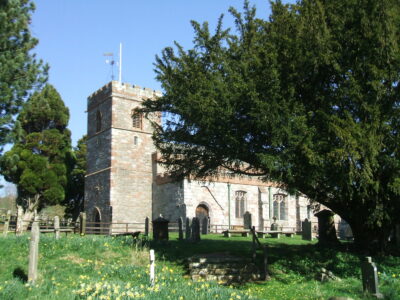 St Andrew’s Dacre Church would like to offer you a very warm welcome to our beautiful Norman church. We normally have a service every Sunday morning, usually at 9.30 am and we maintain a number of traditional forms of worship. For more information see services page Welcome to St. Andrew’s Church at Dacre. | St Andrew’s Church, Dacre
Dacre, in the Diocese of Carlisle, nestles among the hills of the Lake District National Park, only five miles from the M6 and close to Penrith. Mentioned by Bede in his Ecclesiastical History of 731AD as a monastery, St Andrew’s is a historic church with a loyal and friendly congregation that serves four villages. The parish is in one of the most picturesque locations in Cumbria, stretching from the outskirts of the market town of Penrith in the east, to the shores of Lake Ullswater.
Dacre Church was an important part of the story of what happened in 927. At the time, it was a Benedictine Monastery and a centre of learning and religion. Where exactly the treaty in 927 was is not clear but it is certainly likely that the baptism happened here, near fordable points of the Eamont River. The importance of Dacre Church should not be understated. First, Athelstan was a capable diplomat and by incorporating an evangelical element into the treaty he was justifying it as more than just a power grab: hence the baptism of Constantine’s son. Second, religion played a genuine part in everyday decisions not least because of the risk of eternal damnation but also because disease or famine were an extremely present danger. The monastery acted as a centre of healing and medicine. Third, the Benedictine monastery at Dacre was important both as religious site, with its holy well and with religious artifacts. The church had local political power developed and encouraged over the preceding 500 years in the power vacuum after the end of the Roman Empire. Here, there were literate monks able to communicate the message of what had happened to a network across Europe.
A memorial plaque has been commissioned to mark this significant anniversary.
Related Content
Part of our
12th July Ceremony series
The fourth day before the Ides of July in 927 is the day noted in the Anglo-Saxon Chronicle. Monday 12th July 2027 is exactly 1100 years later. This is a day for a quiet reflection on the original Meeting and looking back along the road of time that has brought us to 'Now'.
There will be a ceremony at Mayburgh Henge at midday where representatives of the five kingdoms can gather again. And then a church service at St Andrew’s Dacre, as that is where the original monastery once stood and where the Kings would have listened to God.
View all 12th July Ceremony eventsThe Eamont 927 partnership is grateful for website financial support from Eden and Lyvennet Vale Place Action Group, Eamont and Shap Place Action Group and Westmorland and Furness Council’s Eden Locality Board.