His kingdom
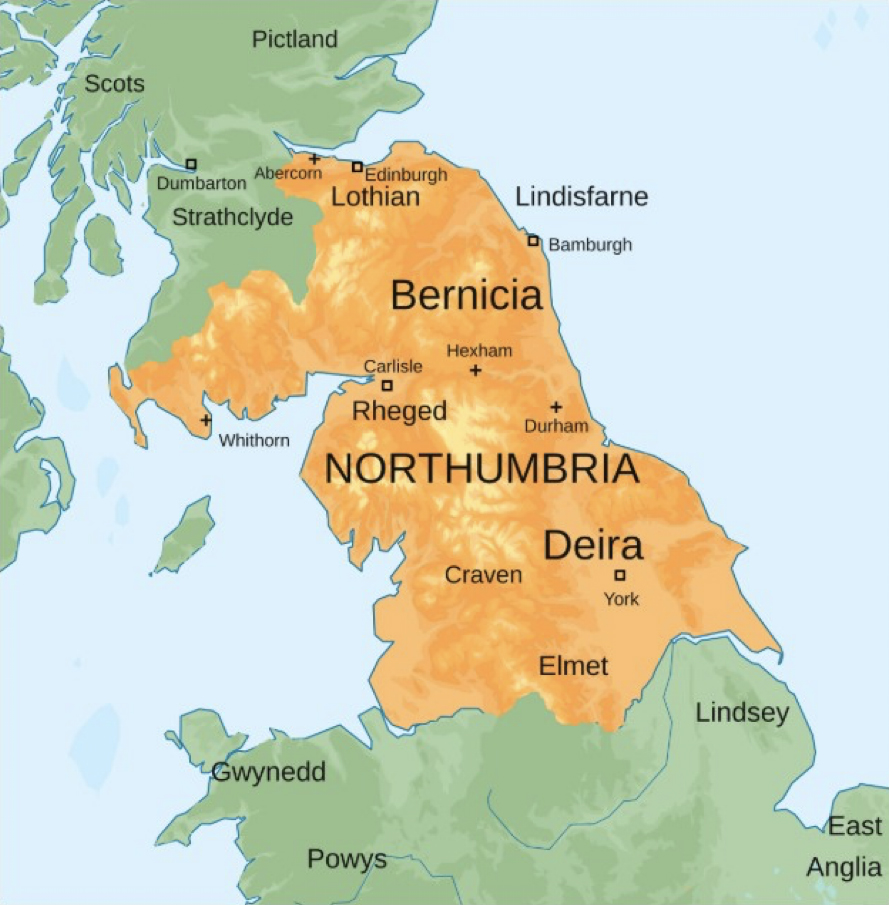
The kingdom of Strathclyde changed its name and shape over the centuries. It was known as the kingdom of Al Clud [Dumbarton Rock or the Rock of the Clyde] and was apparently along that coast. The people were Brythonic speakers thus same family of language as Welsh and Cumbrian. In 870 the Irish Vikings took Al Clun and the kingdom moved up the Clyde to the religious centre of Govan, where there is a good crossing to Partick on the northern bank. The king’s house may have been in Partick. The kingdom also moved further in land and took over the Clyde Valley and became known as Strathclyde. It extended further and further south taking over the old Northumbria as that collapsed because of the Viking raids till by 927 the boundary was at the Eamont.

Owain
There are very few records about that period in Strathclyde but it appears that Owain inherited from his father Dyfnwal in about 911. Shortly after that [sometime before 918] the Lady of the Mercians, Athelflaed, organised an alliance between Mercia, Strathclyde and Alba as a mutual defence against the Vikings, both those living in Ireland and those actually residing in Britain. So Owain and Constantine II were allied to Athelflaed the aunt of Athelstan. Then after her death in June 918, Edward the Elder, Athelstan’s father, held a meeting at Bakewell in Derbyshire sometime in 920, presumably to fix boundaries. The king of Alba [Constantine II], the king of the Strathclyde Welsh [Owain], the sons of Eadwulf [assumed to be Ealdred and a brother Uhtred] and Ragnall the Viking who held southern Northumbria are recorded as meeting Edward. The outcome is not recorded but some agreement was reached.

No border
In 920 Edward had taken over Mercia from his sister’s daughter and thus held the west of the country up to Manchester. He was also king of Wessex which at that point covered the south and east of England up to the Humber. The area between Penrith and Manchester seems to be of vague ownership but was used by the family of Vikings that were kings in both York and Dublin to travel to and fro. Thus Edward and Owain did not have a border.
By July 927 Athelstan was confident enough to fix a meeting at Eamont, which previously had been to the north of English held land. It is likely that the river Eamont was then used to define a new border with Cumbria/Strathclyde.
After Eamont
Following the meeting of 927 Owain is recorded as being at Athelstan’s court and witnessing charters in 931, 935 and 937. He was listed ahead of any Welsh sub-king but, when Constantine also witnessed, below Constantine. It is believed that Owain took part in the great Battle of Bruanburgh in 937 where the Dublin Vikings, the Strathclyde/Cumbrians and Constantine of Alba all fought against Athelstan. This battle was a pyrrhic victory for Athelstan and it is likely that Owain was one of the five kings recorded as being killed as there is no further mention of him in the records.