
The Eamont area was at the border of the Kingdom of Strathclyde/Cumbria in the Early Medieval period. South of Eamont it is difficult to understand who was the governing polity and at different times it was the Angles of Northumbria, the Norse of York,or the Danelaw as well as the Brittonic speakers of Rheged/Cumbria/Strathclyde. Thus, in a typical border position there was a mix of peoples and cultures.
The Celtic tradition of standing crosses and hogbacks carved with freeflowing and twisting lines certainly extended across this area with examples of carved stones from about 900AD in several local places.
Still in position are the hogbacks and pillars forming what is known as the Giant’s Grave in the churchyard of St Andrew’s in Penrith.
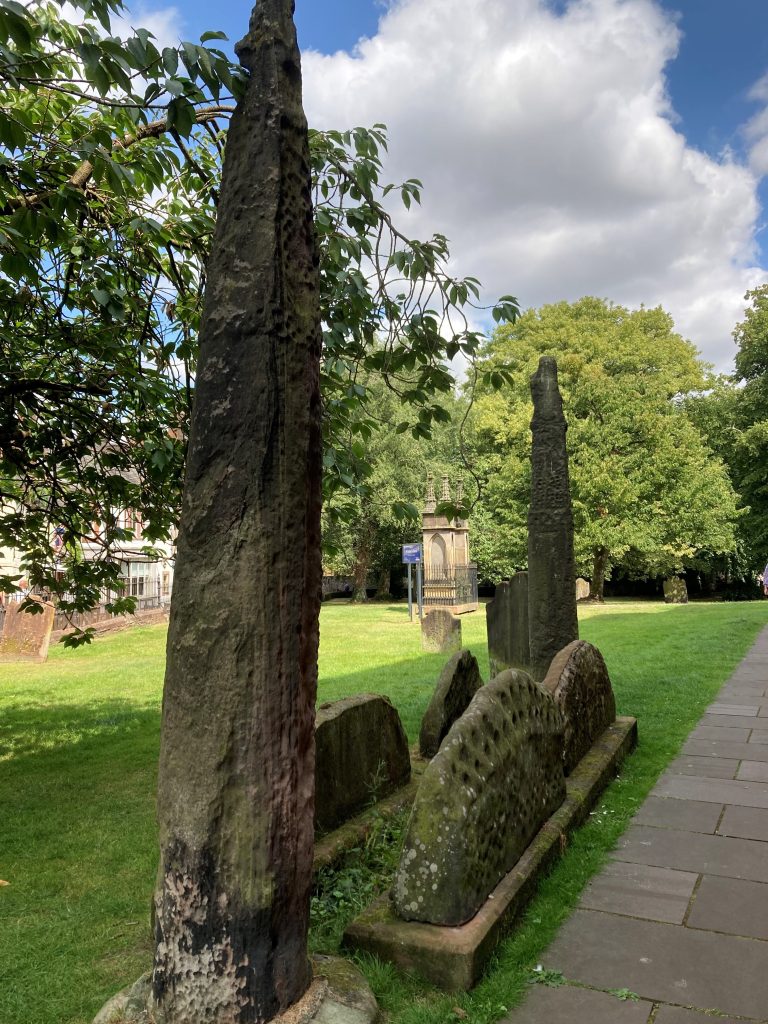
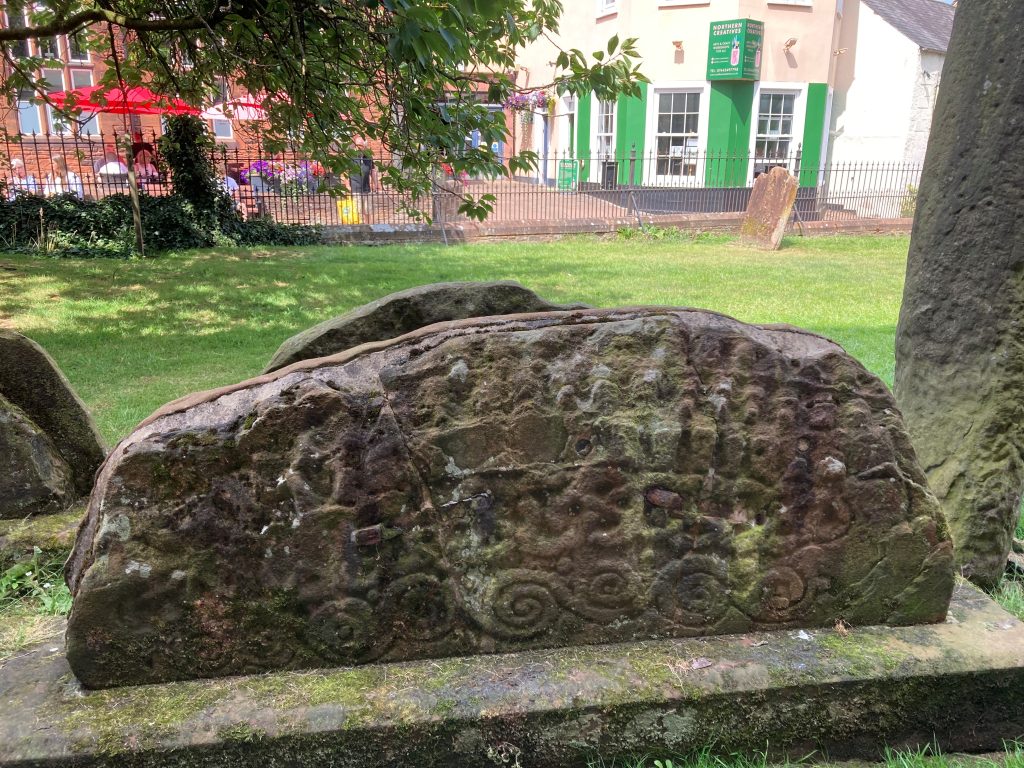


Standing cross
Also in St Andrew’s churchyard is a standing cross dating from the same time.
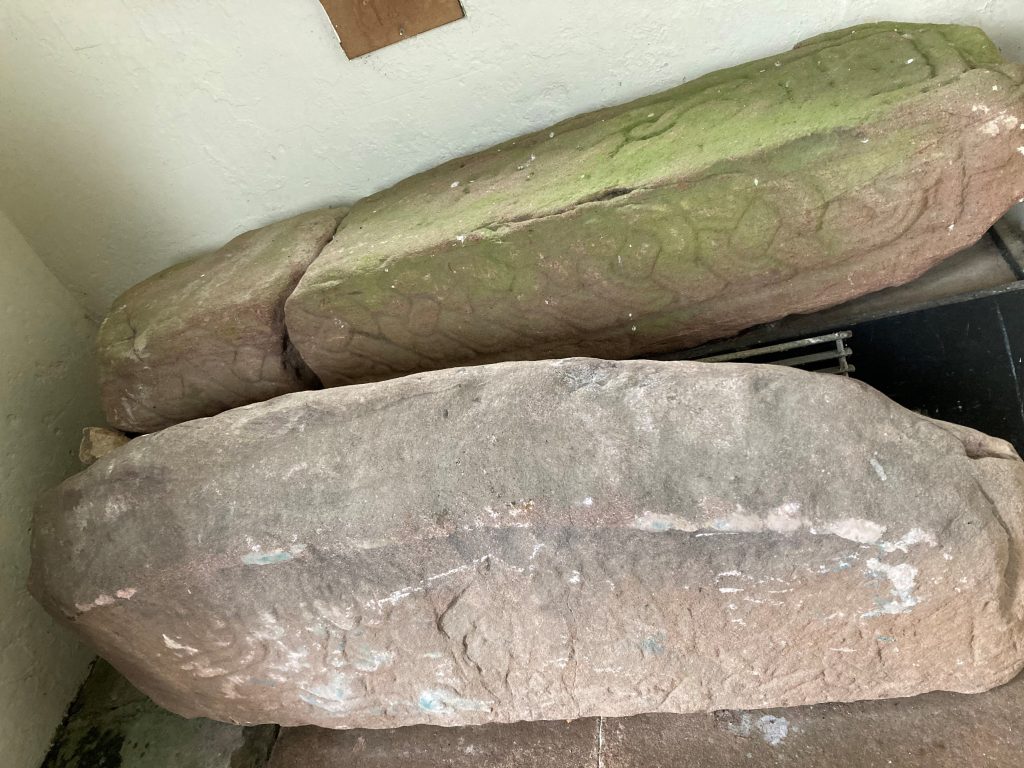
St Michael’s church
In St Michael’s church at Lowther there are further examples of hogbacks that had been dug up nearby but the finely carved shaft of a standing cross was removed to the British Museum.
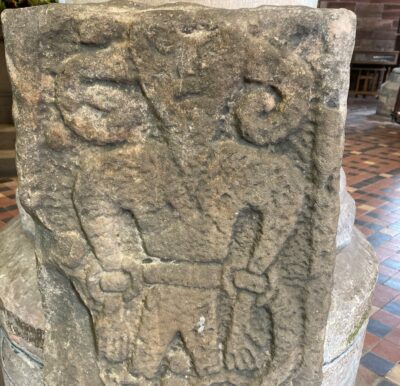
Further afield in Kirkby Stephen an unusual carving of the shaft of a cross shows Loki the Norse god bound in chains and in the Christian context possibly representing the devil. Other parts of carved cross shafts are also in Kirkby Stephen church.

There was also a Benedictine monastery at Dacre and a recent excavation there found various stones that will be displayed in Penrith museum. Dacre is important in the landscape as William of Malmesbury, a monk writing in 1125, gave this monastery as the place of the Treaty of Eamont. Additionally, he stated that Athelstan stood godfather to Constantine’s son there.

