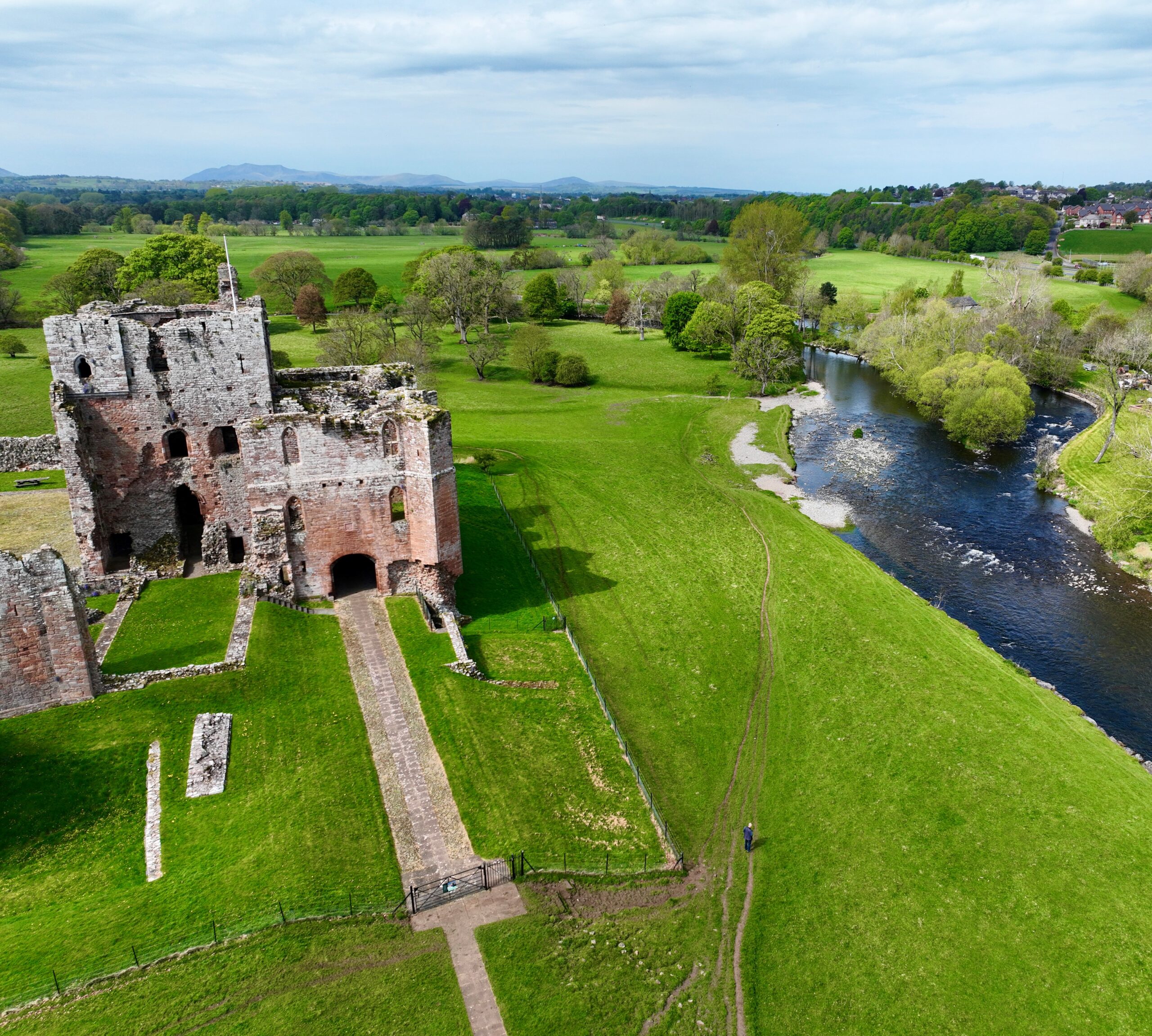
The Romans followed the Neolithic, Bronze Age and Iron Age tracks and these brought them to the great ford across the Eamont just downstream of the waters meet.
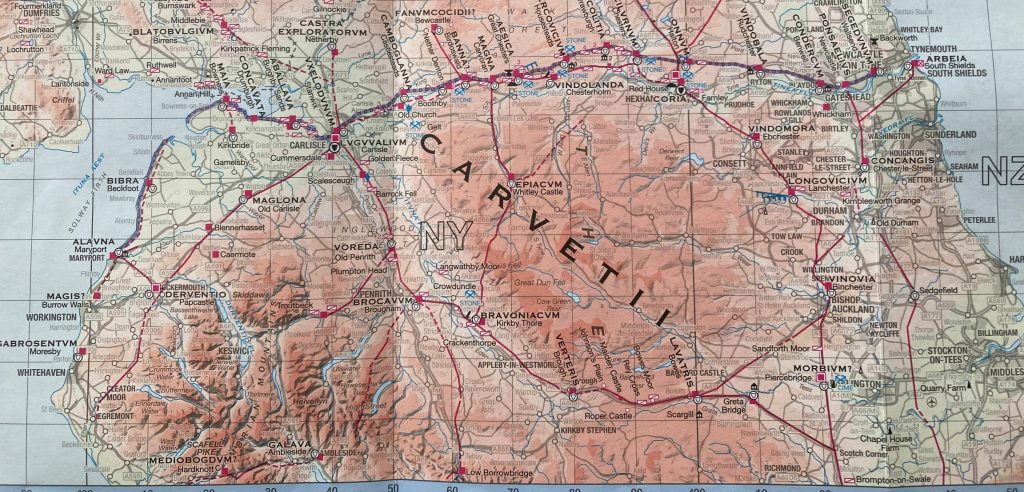
Between the first century AD until 410 AD when the legions withdrew to Rome there was road building and improving above the old tracks plus building of several forts around the Penrith Eden area. Brocavum at Brougham, Bravoniacum at Kirkby Thore and Voreda to the north of modern Penrith.
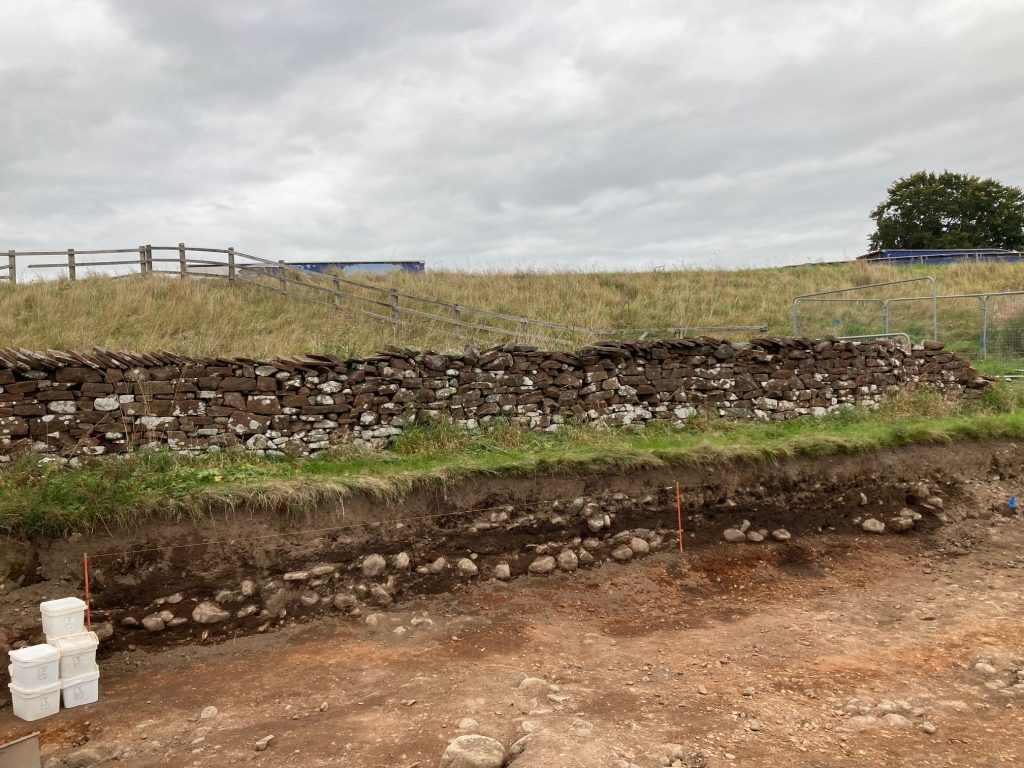
Recent excavations close to the Brougham road junction because of the current improvements of the A66 revealed the foundations of a Roman road metres below the current ground level. Shown here as the lower “wall” of stone with the top of a lorry on the A66 in the background.
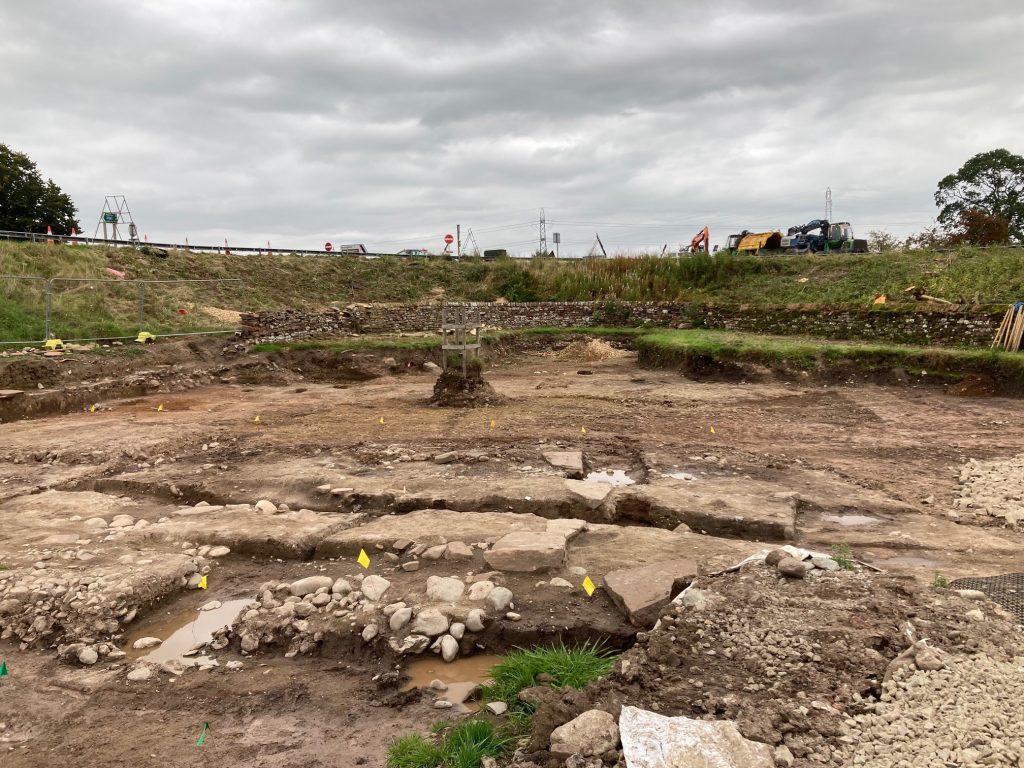
The excavations by Oxford Archaeology also revealed the foundations of 2nd century buildings.
But the main Roman remain in the area is the fort Brocavum. Here the foundations of the outer walls are showing as earthworks in a large rectangle in the field adjacent to the medieval castle of Brougham. It is assumed that the stones above this foundations level were used in the construction of the castle. This fort has not been excavated so still holds its secrets.


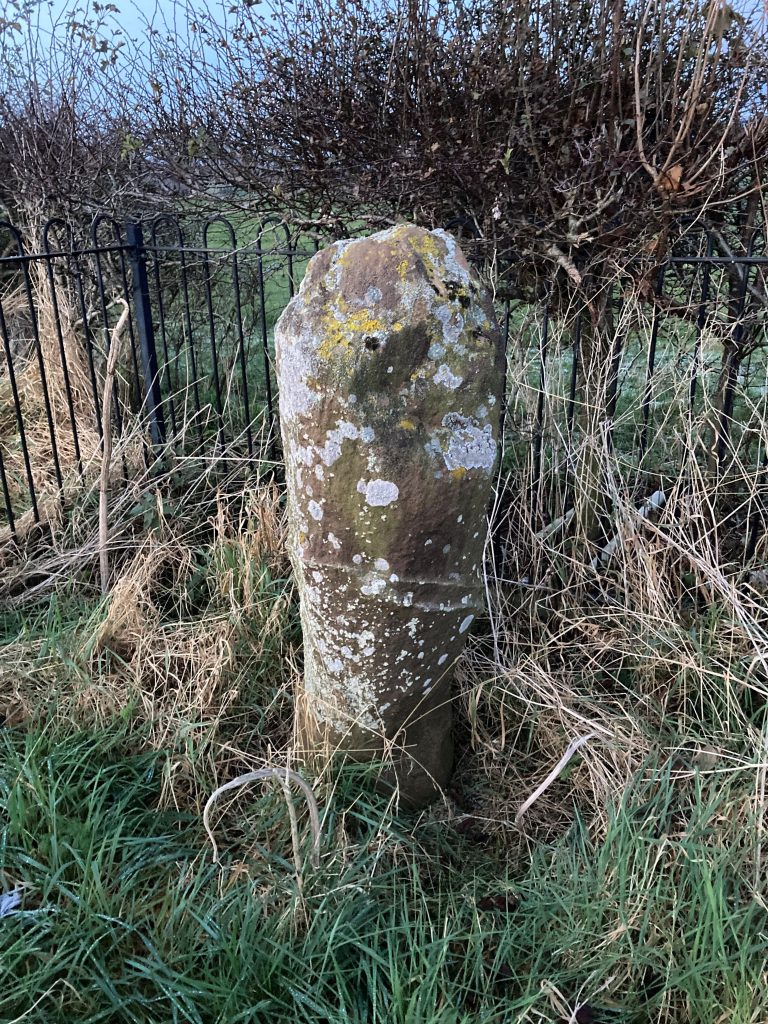
About 5 miles from Brocavum and a mile from Bravoniacum still stands a Roman milestone alongside the old A66. It is believed to be in its original position but is now an eroded sandstone cylinder with no visible markings. Probably erected in the 2nd century and still serving as a parish boundary marker.

